Getting to northern Patagonia from North America takes two flights and one drive: an overnight flight to Buenos Aires, a two hour domestic flight to Neuquén, then four to five hours by road to Chos Malal and the water, or, two days a week, a fifty minute regional flight. Door to door, count on a day and a half. Here is how the route actually works, where people lose time, and what we take off your plate the moment you land.
The route in one paragraph
Fly overnight from the United States or Canada to Buenos Aires. Cross the city from the international airport to the domestic one, or take one of the few domestic flights that leave from the international terminal. Fly two hours southwest to Neuquén, the provincial capital. Walk out of the terminal and find our truck. From there the trip is ours: the drive north to Chos Malal takes four to five hours, and by the time the first river comes into view you have already forgotten the airports.
Flying to Buenos Aires from the US and Canada
Miami, New York, Atlanta and Houston have non-stop service to Buenos Aires all year, and Dallas joins them in the southern summer, which happens to be fishing season. The flights leave in the evening and land the next morning, nine to eleven hours later. From Canada you connect through one of those hubs or through São Paulo. Argentina sits only one or two hours ahead of the US East Coast depending on the time of year, so the flight is long but the jet lag is not. Most guests step off the plane tired and functional, which is exactly what you want before a domestic connection.
Citizens of the United States, Canada, the United Kingdom and the European Union enter Argentina as tourists without a visa for stays of up to 90 days. A passport valid for the length of your stay is all you need. Rules can change, so check the official requirements for your nationality when you book your flights.
Ezeiza to Aeroparque: the one transfer to plan
Buenos Aires has two airports and they are not next to each other. International flights land at Ezeiza, well outside the city to the southwest. Most domestic flights, including most departures to Neuquén, leave from Aeroparque, on the riverfront a few minutes from downtown. Between the two there is a highway, a city, and the traffic that comes with a city of fifteen million people. Allow one to two hours for the crossing, more at rush hour.
The simple way is a car booked at the official taxi counters in the arrivals hall, or a ride app. There are shuttle buses too. Whatever you pick, leave at least four hours between your international arrival and your domestic departure if you want to do it the same day. About two flights a day to Neuquén leave from Ezeiza itself, which removes the transfer entirely, so it is worth checking the departure airport before you buy the domestic ticket.
Many of our guests do something simpler: they spend a night in Buenos Aires on the way in. A real bed, a proper steak, a walk through a neighborhood, and the morning flight to Neuquén rested. On the way out it depends on the timing of the flight home, and we will tell you honestly which option fits your dates. If you are weighing up the city night at all, we went through the security numbers in our look at whether Argentina is safe for a fly fishing trip.
The domestic flight to Neuquén
Three airlines fly between Buenos Aires and Neuquén, ten or more departures a day, about two hours in the air. Book with Aerolíneas Argentinas or JetSMART. After years of meeting guests at that airport, those are the two we trust with your dates, and we would rather say it plainly than watch you learn it. Book this leg once your international flight is confirmed, directly on the airline’s site. Two practical points. First, checked bags are often sold separately on domestic tickets, so read the baggage allowance before you buy rather than at the counter. Second, domestic allowances are lower than international ones: a duffel that flew free from Miami can cost extra to Neuquén. It is never dramatic, just worth knowing.
Neuquén airport is small and easy. You collect your bag, walk out, and we are there. Between that handshake and the one at the end of the trip you will not touch a steering wheel, a booking site or a fishing license form.
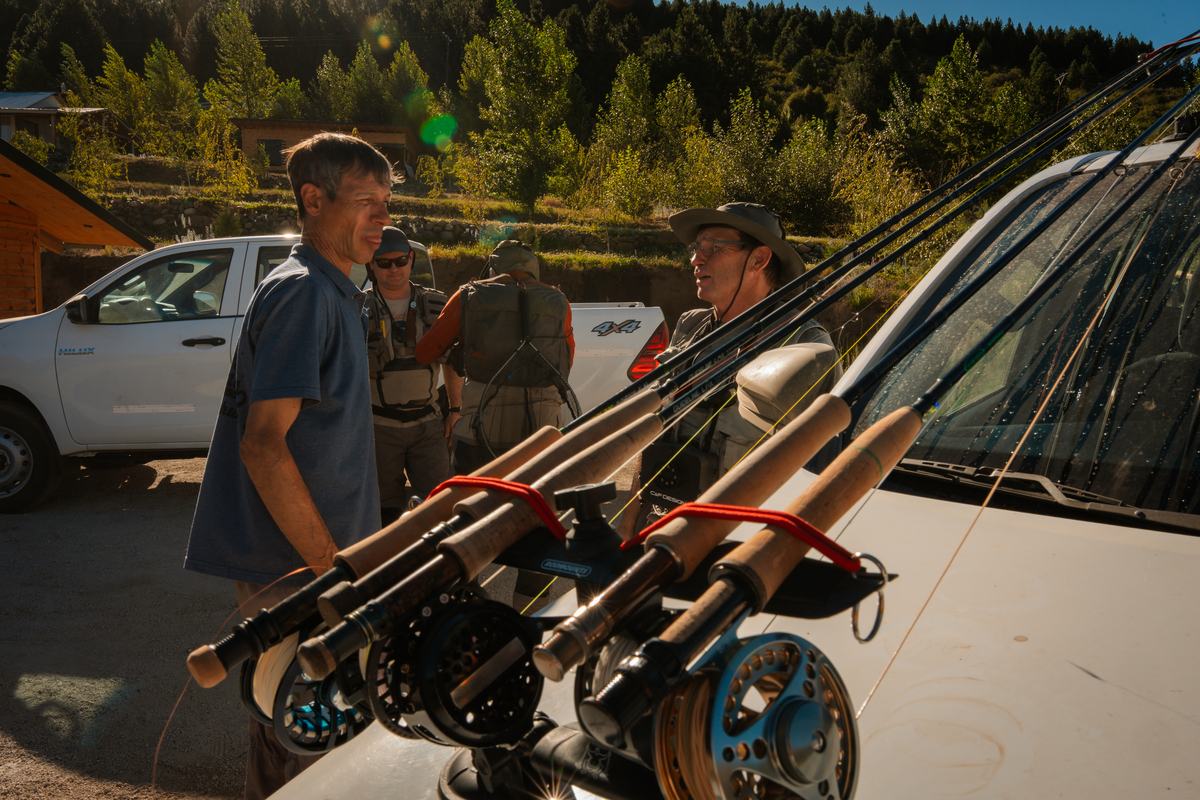
From Neuquén airport, the drive north
The road to Chos Malal runs north for four to five hours, close to four hundred kilometers. It starts in flat oil country, turns into ranch country, and the mountains keep rising to the west the whole way. We stop for coffee and empanadas, you stretch your legs, and somewhere in the second half the phone stops mattering. You arrive in the late afternoon, sleep close to the water, and the first cast happens the next morning. Every transfer from the airport onward is included in your trip, as it should be.
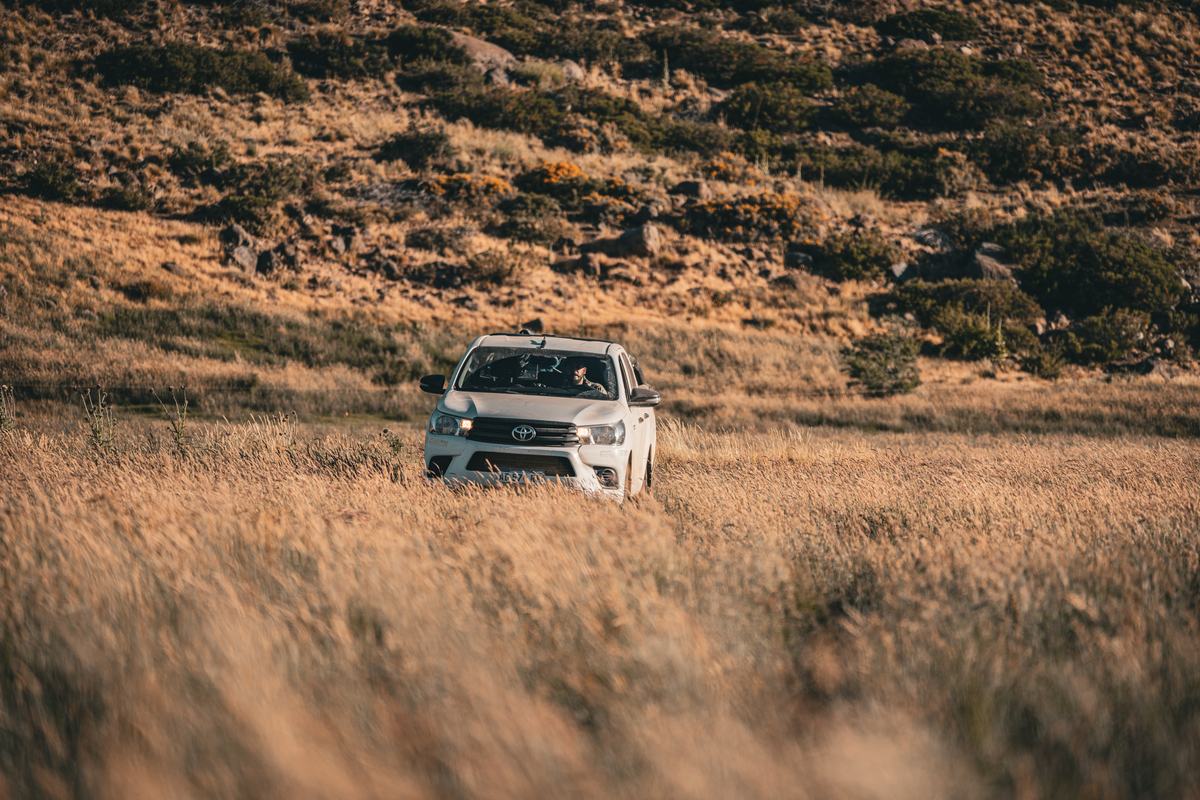
Since September 2026 there is also a way to skip the road. American Jet flies from Neuquén to Chos Malal on Mondays and Thursdays, fifty minutes in a nineteen seat turboprop, the first scheduled flights into Chos Malal in fourteen years. It is a real option when the days line up, with two caveats: two flights a week, and a small aircraft with a small baggage allowance, so rod tubes and waders need a conversation before you count on it. Tell us your dates and we will tell you whether the flight or the truck makes more sense that week.
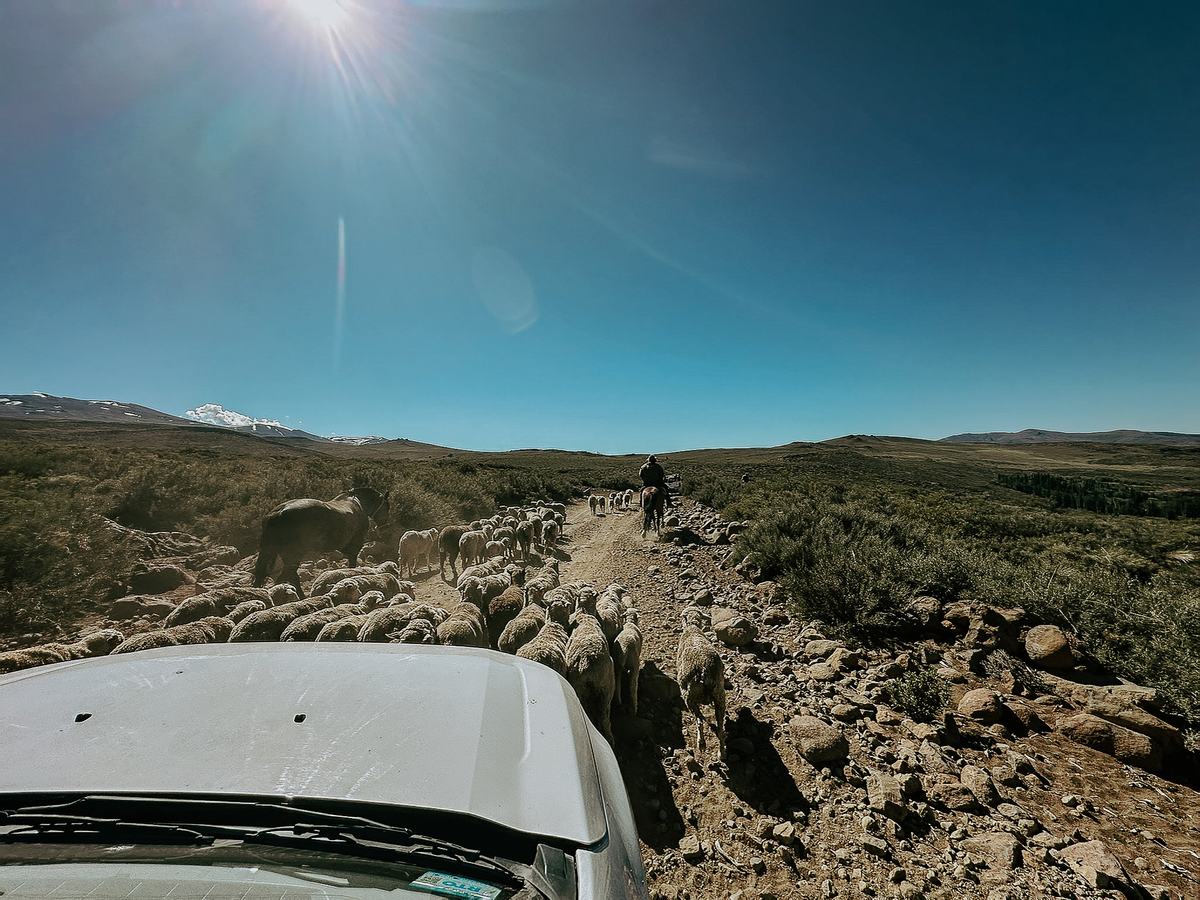
If your flights line up, it is possible to leave New York in the evening and sleep by a Patagonian river the following night. It is a long day. The overnight in Buenos Aires turns it into two easy ones, and that is what we usually recommend for a first trip.
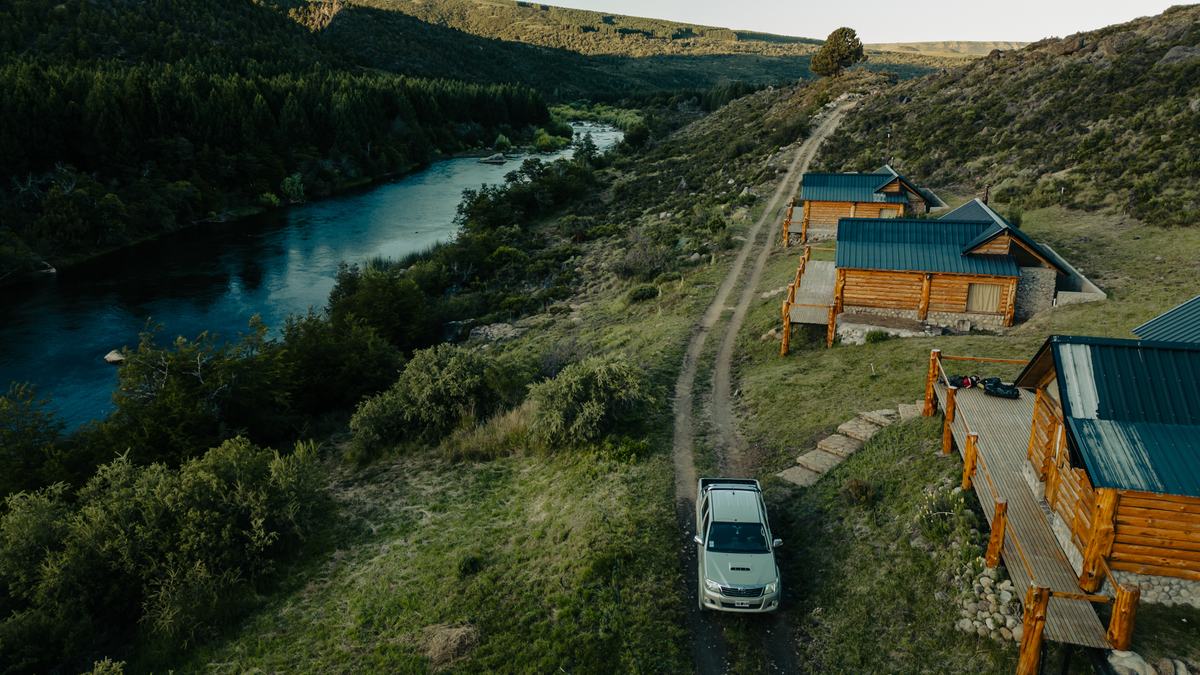
Rods, reels and bags on Argentine flights
Four-piece rods in a tube travel well. On the international flight the tube usually goes in the cabin without discussion. On the domestic flight the cabin allowance is tighter, so plan on checking it, ideally inside your duffel rather than as a separate piece. Reels, flies and anything you would hate to lose stay in your carry-on. Waders and boots go in checked luggage; clean, dry boots make everyone’s life easier, ours and the rivers’ included.
Mostly you will fish 5 and 6 weight rods with floating lines, dry flies and terrestrials, with streamers for the big water. A complete packing list comes with your quote. If you would rather travel light, tell us what you need and it will be waiting for you when you arrive.
How many days to add around the fishing
Count a day and a half of travel on each side. Arriving, you land in Buenos Aires in the morning and, with a night in the city, reach the water the following afternoon. Leaving, you fish until the last evening, drive to Neuquén in the morning, fly to Buenos Aires, and connect to the overnight flight home the same evening. That lost day on either end is one of the two quiet costs of a trip like this; the other is tipping, and we cover both in our breakdown of what a fly fishing trip to Argentina really costs.
The season runs from November to May and the windows fish very differently, so pick your dates before you pick your flights. Our guide to the best time to fly fish in Argentine Patagonia walks through it month by month.
Money, phone and paperwork before you land
Send us your passport details once and your Argentine fishing license is sorted before you arrive, together with the access arrangements for the water. Cards work in the cities and most towns; a little cash in US dollars, in small bills, is useful for the odd purchase and for tips. Argentina runs on 220 volts with its own plug shape, so bring an adapter. Cell coverage fades outside the towns, but our vehicles and camps carry Starlink, so you can check in at home from some of the emptiest valleys in Patagonia, or not, as you prefer. Travel insurance that covers a remote trip is a good idea anywhere, and here too.
Getting there, questions answered
- Which airport do I fly into for fly fishing in northern Patagonia?
- Neuquén, the provincial capital, reached by a two hour domestic flight from Buenos Aires. We pick you up at the terminal and drive you north, four to five hours, to the water. Two days a week, a fifty minute regional flight to Chos Malal can replace the drive.
- Can I fly directly from the United States to Neuquén?
- No. Every route from North America passes through Buenos Aires, where you change airports or terminals for the domestic flight. Leave at least four hours for the connection, or spend the night in the city.
- Should I spend a night in Buenos Aires?
- On the way in, we recommend it: you arrive on the water rested instead of drained. On the way out it depends on the flight times, and we plan it with you when we build the trip.
- Do I need a visa to fish in Argentina?
- Not for tourist stays of up to 90 days if you hold a passport from the United States, Canada, the United Kingdom or the European Union. Check the official requirements for your nationality when you book.
- Are the transfers from the airport included?
- Yes, all of them. From the moment you leave Neuquén airport until we drop you back there, every kilometer is ours, and so is the paperwork. Tell us your dates and we send a firm written quote within a few days.
Once the route is clear, the only decision left is the week. See how the mobile safari works, or go straight to planning your trip.