The short answer: the trout season in northern Argentine Patagonia opens in early November and runs into early May, and the heart of it beats from mid-December to mid-March. The longer answer is more interesting. There is not one season here. There are three, and they fish so differently that the right question is not when the fishing is good. It is which fishing you want.
Everything below comes from our guides, who live on this water all season, every season. Most rivers we fish are catch and release by regulation, which is a big part of why the browns and rainbows are both numerous and large. Here is how the months actually behave.
Early season, November and December: high water and hungry fish
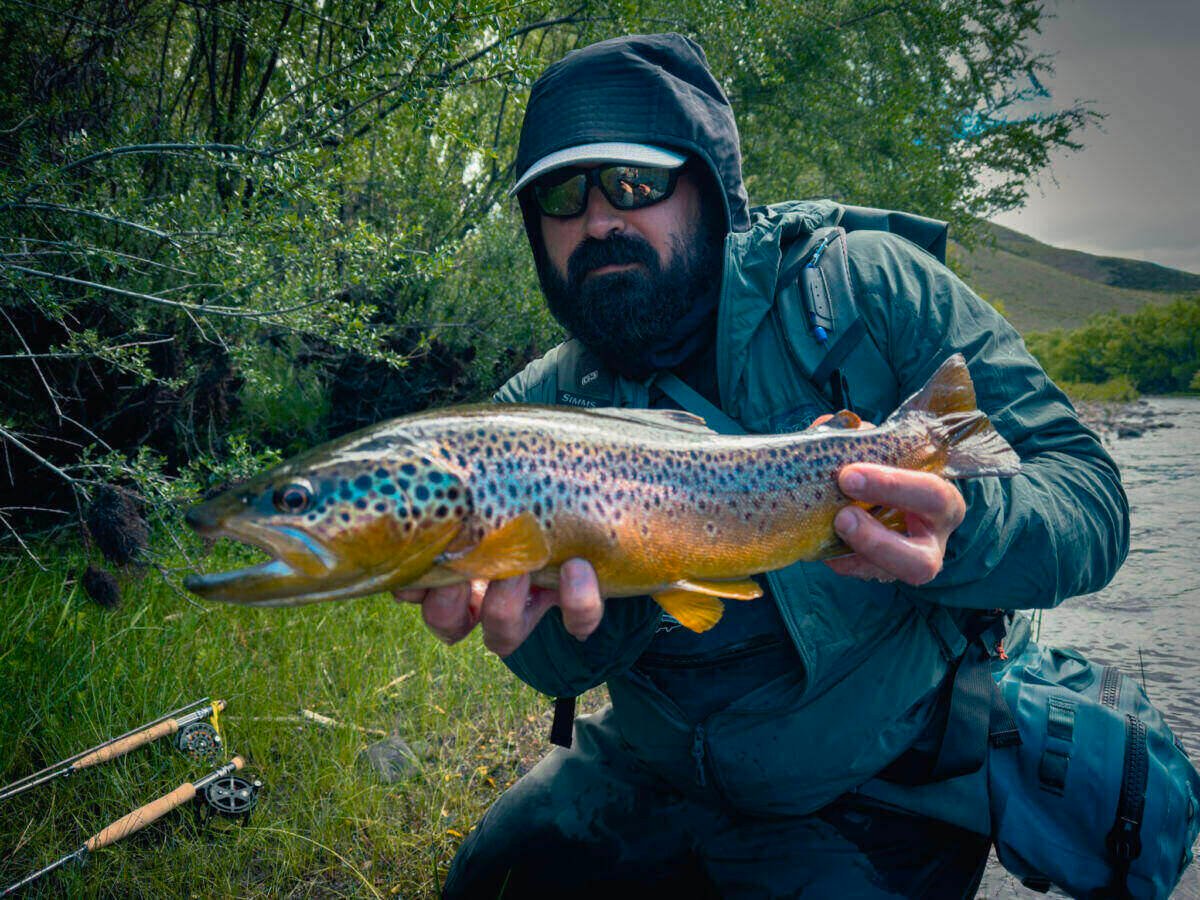
Spring in the far north means rivers running full. Some days the water carries a touch of color from snowmelt, rarely enough to matter. What matters is that the trout have just come out of winter and they are hungry. This is streamer and heavy nymph water: big flies swung deep, hard takes, fish that fight like they mean to keep the fly.
The weather will not sit still. You can get sun, hail and a blue evening in the same afternoon. Bring layers and a sense of humor. What you get in exchange is solitude that is hard to describe honestly without sounding like we are exaggerating. Whole valleys, no other anglers, water that has not seen a fly since April.
Who this window is for: anglers who like adventure more than comfort, want a real shot at heavy fish, and would rather share the river with goats and condors than with people.
The heart of the season, mid-December to mid-March: dry flies and wet wading
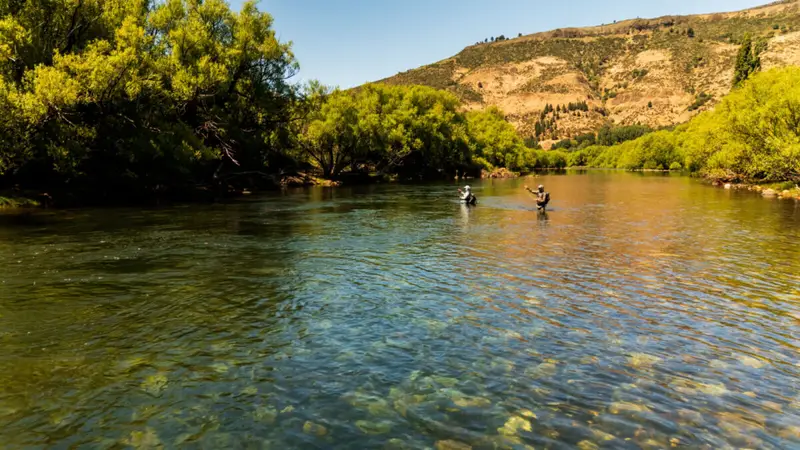
By late December the rivers drop and clear, and the surface game begins. This is terrestrial season: flying ants, grasshoppers rattling out of the dry grass, beetles, and big foam attractors that imitate all of the above badly and work anyway.
Two things surprise American anglers here. First, the rises are quiet. A big brown sipping an ant makes a ring you could miss if your guide were not pointing at it. Second, there is no evening hatch ritual the way there is on many waters back home. The dry fly fishing happens in broad daylight, sight fishing to visible fish, which to us is the best version of the sport there is.
Summer heat makes it wet wading weather: shorts, boots, sun on your shoulders and cold current around your knees while the valley shimmers. We keep waders in the truck for the afternoon storms and the odd cold snap. This is the most comfortable window, the most social one, and the most requested, which is saying something on rivers where requested still means six rods maximum.
Who this window is for: dry fly purists, first trips to Patagonia, couples and groups who want warm days and visual fishing.
Late season, March and April: big browns and gold light
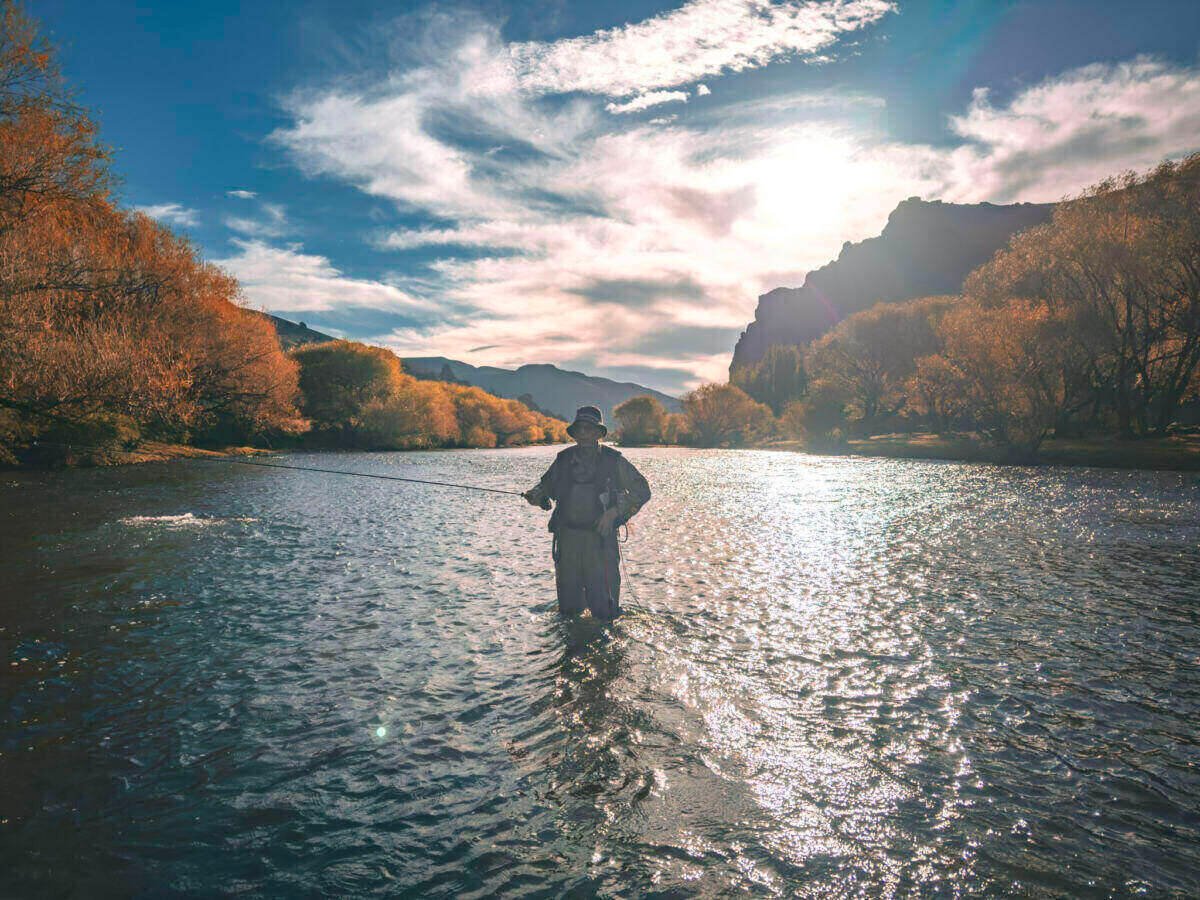
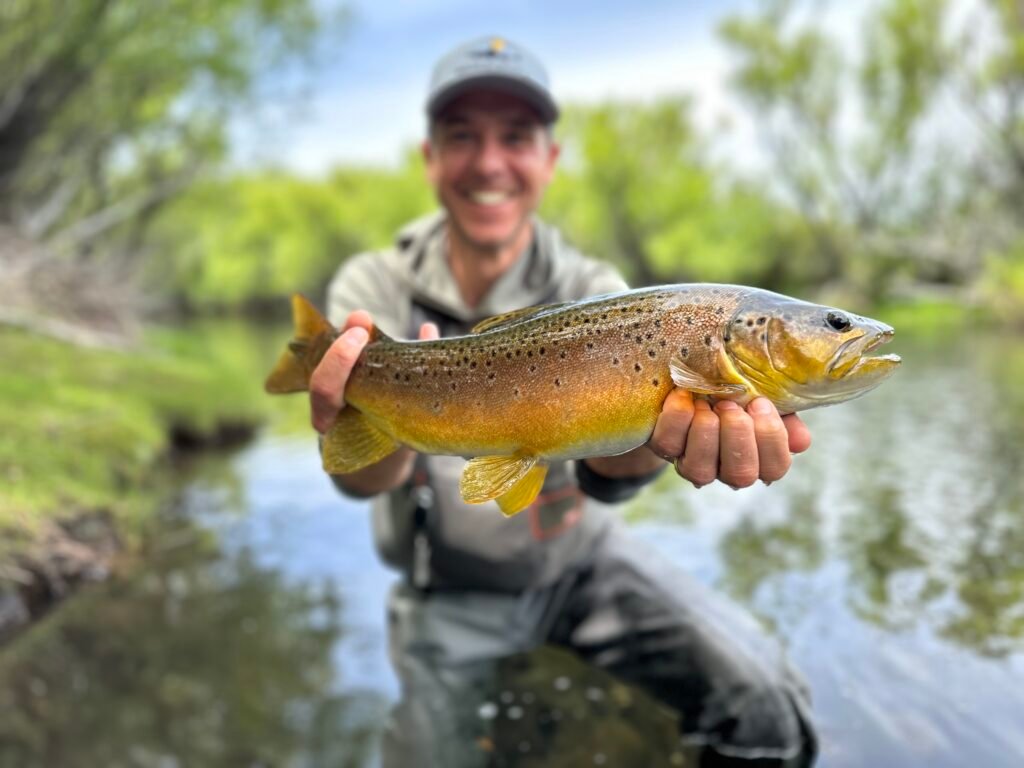
Autumn arrives fast in the mountains. Nights turn cold, the poplars and willows go yellow and orange, and the light drops to that low angle photographers cross oceans for. The big browns feel the change too. In the weeks before they spawn they turn aggressive and territorial, and a streamer on a sinking line pulled past the wrong rock gets answered with intent.
The crowds, such as they ever were, are gone. Days are shorter, so we fish them fully. If your idea of a perfect photograph is a heavy golden fish, red leaves and asado smoke in the same frame, this is your month.
Who this window is for: anglers chasing the biggest brown of their year, photographers, and anyone who prefers a quiet, concentrated kind of week.
About the wind, honestly
Patagonia has wind. Anyone who tells you otherwise is selling something. It blows hardest in spring, eases in high summer mornings, and it never fully leaves. Here is what most articles skip: the wind feeds the fishing. It shakes grasshoppers and beetles onto the water and it breaks the surface so the big fish feel safe eating in daylight.
Casting in it is a skill, not a talent. Shorter leaders, lower and harder strokes, picking your angles, letting the guide put you on the protected bank when it honks. Our guides have fished these winds their whole lives and they will adjust your day around it. Nobody goes home because of wind. Some of our best days happened in it.
So which window is yours?
If you dream in dry flies, come between mid-December and mid-March. If you want empty valleys and heavy early fish, take November or early December. If you want autumn color and an angry pre-spawn brown, look at March and April. There is no wrong door, only different rooms.
Dates fill unevenly: the summer heart goes first, often a season ahead. Tell us what you love and how you like to fish, and we will point you at the right week rather than the most convenient one. That honesty costs us some bookings and earns us better trips.
Season questions, answered
- What is the single best month to fly fish Argentine Patagonia?
- For most anglers, January and February: low clear water, dry fly fishing to visible trout, warm wet wading weather. November and April are just as good for a different brief, solitude and heavy fish early, autumn color and big pre-spawn browns late. The month barely moves the budget either way, here is what a week of fly fishing in Argentina really costs.
- Can you fly fish Patagonia year round?
- No. The trout season in the north runs from early November into early May, and the rivers close for the austral winter. Plan inside that window. Whatever the dates, your Argentine fishing license is our paperwork, not yours.
- Is the wind a deal breaker?
- No. It complicates the cast and it feeds the fish, dropping terrestrials on the water and covering the surface so big trout eat in daylight. Guides adapt tactics and water choice to it every day.
- Early season or late season, which one?
- Early means full rivers, streamers and valleys to yourself. Late means autumn gold and the biggest browns of the year moving before the spawn. The summer heart in between is the dry fly window.
- Is catch and release mandatory?
- On most of the water we fish, yes, by provincial regulation. It is the main reason the rivers hold both numbers and size, and we fish single barbless hooks throughout.
What moves with the season is the plan, not the quality
Our camp follows the fishing, so the program you get in November is not the program you get in February, and that is the point. See how the mobile safari works, or go straight to the part where it becomes your trip.